
Car door lock frozen in Brampton?
Try lock de-icer or a warmed key first. Never pour hot water on the lock and never force the key. If the key still will not turn, or it snaps, a local car locksmith can open the car.
From $95. You get the full price on the call, and nobody drives out until you say yes. Open daily 7am to 10:30pm.
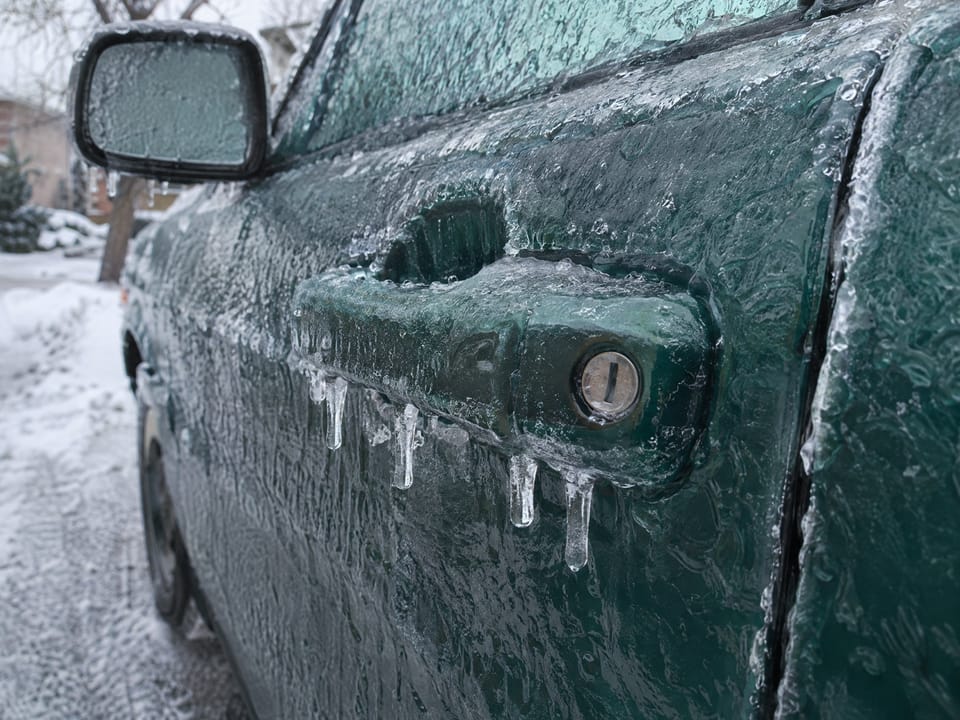
Is the lock frozen, or the door?
Check this first, because the fix is different. A key that will not go into the keyhole, or goes in and will not turn, means the lock is frozen. If the key turns or the fob unlocks the car and the door still will not open, ice is gluing the rubber seal to the frame.
A door frozen shut often gives way if you push it firmly inward first, to crack the ice, and then pull. Try every other door and the hatch as well, since one is often free. Pull the handle gently. Plastic handles snap in deep cold.
What to try first on a frozen lock
- Lock de-icer. Spray it into the keyhole, wait a minute, then try the key gently. Gas stations and hardware stores sell it all winter.
- A warm key. Hold the metal blade in your closed hand for a minute, slide it in and wait before turning. You can warm the blade with a lighter for a few seconds, but keep the flame away from the plastic head. The chip that starts the car sits there.
- Hand sanitizer. The alcohol melts ice. Put a little on the blade, slide it in and wait.
- The fob and the other doors. A frozen key cylinder does not stop the fob from unlocking the car. If the fob does nothing, its battery may be weak from the cold.
Turn the key with light pressure only. If it does not move, stop and warm it again.
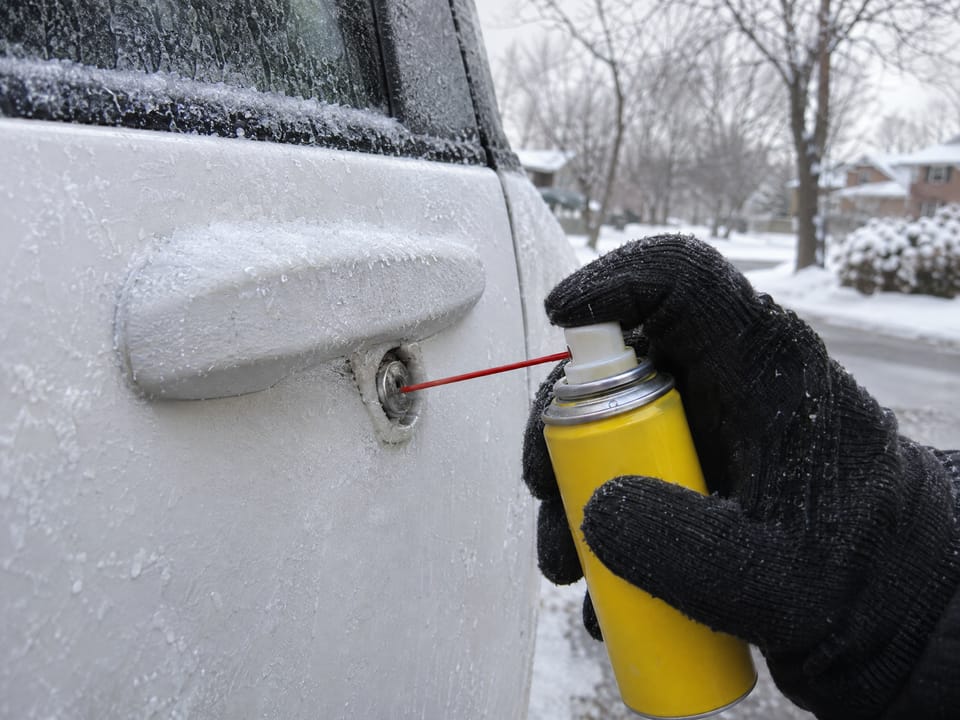
No hot water, and no forcing the key
- No hot water. It can crack cold glass, and it refreezes in the lock and the seals within minutes. The next morning is worse.
- No forcing the key. A frozen lock is a common way to snap one. Once part of the blade is stuck inside, it has to come out before the lock works again.
- No pliers, screwdrivers or wire in the keyhole. They wreck the lock and scratch the door.
- No breathing into the lock. The moisture in your breath freezes too.
If a child or an animal is shut inside a cold car, call 911 first.
When to call a technician
When de-icer and a warm key have not worked after 10 to 15 minutes. Straight away if the key has snapped in the lock, or if the keys are locked inside and the fob is not with you.
- Frozen lock: the technician opens the car at the door frame with an air wedge and a long-reach tool, without touching the frozen cylinder. The ice does not stop the job.
- Key snapped in a frozen lock: say so on the call. The broken piece can often be taken out, but that depends on the lock, so you hear what is possible before any work starts.
- Door frozen shut: that is ice on the seal, not a lock problem. Say so and you will be told whether a visit will help or whether warming the car is the better answer.
Expect the technician in about 20 to 30 minutes on most days. The line opens at 7am, so an early start on a cold morning is covered.
What does a frozen-lock call-out cost?
The standard lockout price applies when the car is opened at the door. Taking out a snapped key costs more, and you hear the figure before any work starts. The cost page has the detail. If your house key is locked in the car as well, the Castlemore page explains why one visit covers both.
How do I stop the lock freezing again?
- Keep a small can of de-icer in your coat or at home. A can locked in the car is no help.
- After a winter car wash, open and close each door a few times so the seals and locks dry before you park.
- Before winter, wipe the door seals with silicone spray and put a little graphite or lock lubricant in the keyhole. Do not use oil-based grease.
- When freezing rain is forecast, park in a garage or cover the driver’s door.
Key still will not turn after de-icer?
Open daily 7am to 10:30pm, weekends and holidays included.